Thursday, November 23, 2017

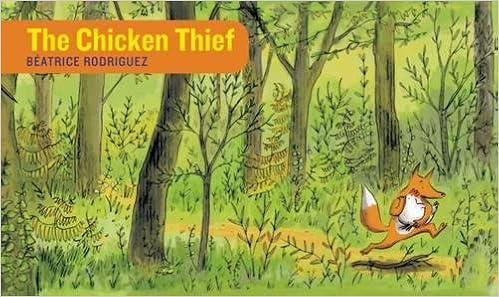
The Chicken Thief by Beatrice Rodriguez


Image result for the chicken thief

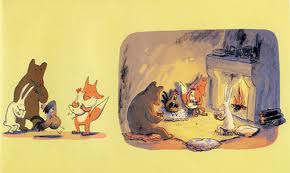
In this wordless story that is both funny and sweet, a fox steals a hen away from her home. Bear, rabbit, and rooster give chase, but in a twist on the usual children's story, this fox is not a villain. Rather, he tenderly holds hen as he runs into the night. A funny and life-affirming story, The Chicken Thief defies expectations, enlivening the mind with its cleverness while going straight for the heart. This intelligent and charming book is great for all ages. A love story, a road movie, and a playful speculation on stereotypes and misconceptions, The Chicken Thief makes for an unforgettable reading experience!


Image result for the chicken thief


Image result for the chicken thief

Luba and the Wren by Patricia Polacco

Image result for luba and the wrenI LOVED this book. I think I'm a sucker for any kind of retold fairy tale though. I really reminded me of the book by Anita Lobel, The Seamstress of Salzburg. A young girl is offered something unimaginable and she is content as she is. Her family is not, and, wishing to please them, she agrees to what is asked of her. I am a new convert to Patricia Polacco and I have to admit, I'm a little bias. We love her Thank you, Mr. Falker book!


Image result for luba and the wren

Sunshine by Jan Ormerod


Image result for sunshine jan ormerod

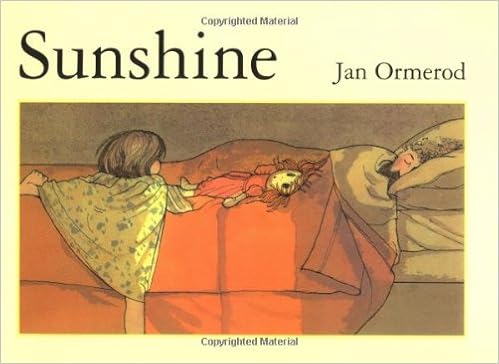
Well it's no secret that I adore Jan Ormerod. Her illustrations are poignant, classic, subtle and at times hilarious. What I love about this wordless book is the relatable story line where a little girl is getting ready for the day and ends up "saving" the day by getting her family out the door on time. Ormerod's subtle use of color to convey emotion or even an impending disaster ("burning toast!) is unparalleled. Now, to be honest, I don't usually like books with only pictures. I feel pressure when I'm reading them with kids to get the story "right." But this book is an exception and one with a permanent place on our book shelves.
Image result for sunshine jan ormerod

Sunday, October 1, 2017

Truman Capote

The Thanksgiving Visitor   My first experience with Truman Capote was as a young teenager. I was taking an English class at the local junior college. I was taking it more for fun than anything. I still had to complete my required homeschool English courses. The first book the teacher assigned was Truman Capote's In Cold Blood. I was unprepared. I had never read anything so grotesque. That is, I had never read a scene as jarring and bloodied as the massacre scene in In Cold Blood. I promptly dropped the class and I have ever since had a bad taste in my mouth regarding Capote.
   Fast forward to the past year when I've been obsessed with the southern Gothic writers such as Flannery O'Connor and Carson MacCullers. Capote's name keeps coming up... I decided to try him again. This time, I selected a slim, old volume on the library shelves: The Thanksgiving Visitor.
  No joke, Capote is an INCREDIBLE writer. He draws you in. He pushes you out. He makes you love and hate his characters. You ARE the characters. You ARE in the scrubbed clean, poor Alabama farmhouse with his relatives entertaining Odd Henderson, his hated classmate who tortures him on a regular basis at school but has, in a twisted turn of events, come as a guest to the family Thanksgiving.  The ending is satisfying. I promise you.
The Thanksgiving Visitor   Possibly my most favorite parts are those dealing with food description because, well, you know me, I LOVE food in books and movies. Here is Capote's description of "a regular stomach sweller," served at 5:30am on the dot no less.
"To the present day I retain a nostalgic hunger for those cockcrow repasts of ham and friend chicken, fried pork chops, fried catfish, fried squirrel, fried eggs, hominy grits with gravy, black-eyed peas, collards with collard liquor and cornbread to mush it in, biscuits, pound cake, pancakes with molasses, honey in the comb, homemade jams and jellies, sweet milk, buttermilk, coffee chicory-flavored and hot as Hades."
  (The edition I read was illustrated by Beth Peck and these pictures come from her.)

Friday, September 22, 2017

The Last Train to Paris and Journals

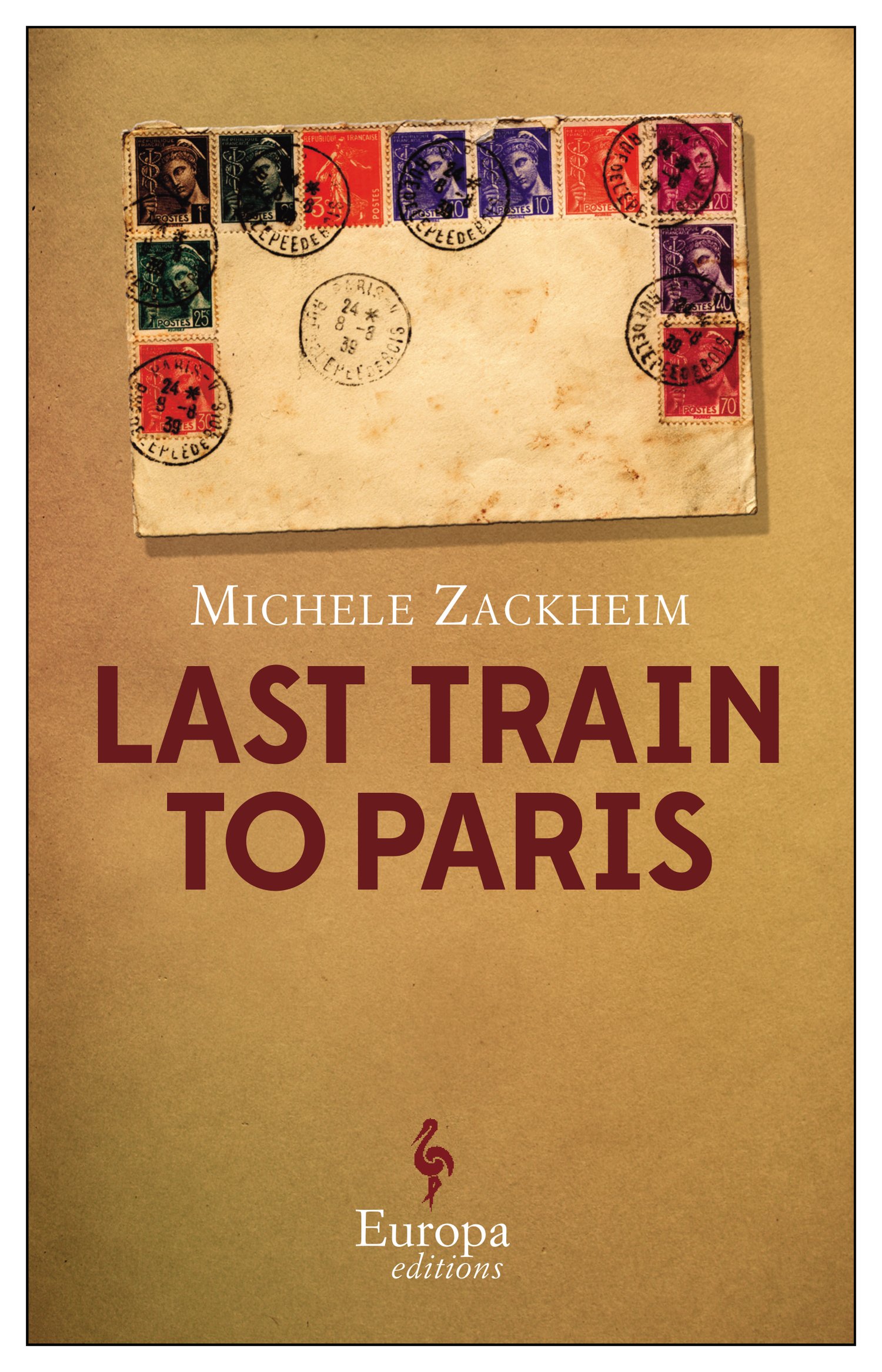
   I am reading Michele Zackheim's The Last Train to Paris. I picked it up at the bookstore downtown and I have to confess, aside from the fact that it is an Europa Editions publication (which I generally love), I really bought it because of the cover. I have a love of all things postal. Especially book covers that depict letters, stamps, canceled envelopes, etc. The cover of The Last Train to Paris holds all the postal charm you could want in its simple graphic.

   The book begins with the author reminiscing as she is working in her garden. She is an old women who has lived through WWII and she tells her audience just exactly what she does when she feels herself falling into cranky despair. She eats yogurt straight from the container and drinks too much coffee--"sometimes too much whiskey." She bangs around her house and carries on conversations with herself. Finally, she takes pen and paper, and begins to write. A shift comes over her body. "My pen begins to tickle my passion for words and I squirm with pleasure." I love that sentence!

   One thing has stuck with me as I'm reading this book. The author talks about rediscovering her old journals in a rusted over trunk. Once, her friend had come across his old journals and began to read them. He was so disturbed by his earlier self and what he had been through, he gathered the lot in an armful and dumped it into a passing garbage truck. But the author sees it differently. "It will be interesting for me to read my old self. I wonder how honest I was?" 

  I wonder how I will feel as a 70, 80, or (oh, heavens!) a 90 year old women reading my thoughts from when I was twelve and nineteen, and a new bride and a newly nursing mother? I know when I occasionally go back now and read entries, I scoff, just like old women in Last Train to Paris did. "Everything then was so important, so dramatic, so tragic," Sometimes I blush at my own earnestness and innocence.
   I was discuss old writing and journals with my friend, Shaul, recently. He was of the opinion that some things are better let go of then kept to be revisited. "Get rid of that old energy," he said. I thought about it for a while. I briefly considered hauling my some 30 or so journals out to the makeshift fire pit in my backyard and watching them go up in smoke (honestly though, with all that ink they would probably smolder for days). But in the end I didn't. I want to read them later. I want to revisit my old innocent, sad, joyous, disgusted, strange self when all I have to occupy me are memories. Maybe I'll cringe in shame at the things I thought important enough to write. Maybe I'll cheer my self on at my first kiss, though now I burn with embarrassment, STILL 17 years later. But maybe I'll be highly entertained, and that's what I'm hoping for.
   

Wednesday, May 24, 2017

Lucy's Summer by Donald Hall

   Lucy's Summer tells the story of two sisters who live in rural New Hampshire with their mother who is a milliner. Lucy's Summer has all the charm and sweetness of a bygone era and it will make you want to transport back into the early 1900s to experience some of what Caroline and Lucy experience.

   The girls, Lucy and Caroline, help with the canning and food preservation and watch their mother as she makes new hats for the surrounding farm families. At one point they take the "peanut" train to Boston for hat inspiration and eat oyster stew, frankfurters and Boston baked beans for the first time in their lives.

donald hall 
Donald Hall

   Lucy's Summer is illustrated by Michael McCurdy's stunning wood engravings. McCurdy
also illustrated Hannah's Farm which has been a great favorite around here for years and American Tall Tales by Mary Pope Osborne (of Magic Treehouse fame). Oh, and how could I forget! Lucy's Summer and Lucy's Christmas are also treasures!

    Donald Hall is the author and quite the author in his own rite. He currently resides in New Hampshire in a farm house. I love his poetry and cry every time I read Green Farmhouse Chairs. It reminds me so of my grandparent's farm in the Central Valley.

Monday, May 22, 2017

No. Six Depot

    I am always in search of the perfect cup of coffee. Not just a great cup of coffee, but the perfect up. Perfection in a mug with a trickle of cream. The cream should enhance the delicious roasty flavor, not cover up bitterness or poor bean quality.

    No. Six Depot in West Stockbridge, Massachusetts delivers just such a cup. On brew the morning I was there was a roast called Heart of Darkness (which of course I had to try since I was on a literary road trip) and it truly lived up to its name with it's deep, rich dark roast. It was delightfully nutty with a buttery rich taste to it. Brewed to perfection, I enjoyed it with a flaky, just made, croissant.


No. Six Depot isn't just a coffee shop. It is a gallery, a store and a roastery all rolled into one. Flavio Lichtenthal is the owner and roaster along with Lisa Landry who curates the gallery and does the tea importing. I sat out in the shade of a red umbrella and journaled about my couchsurfing experience with Mischa the night before. It was a glorious morning.

Wednesday, May 17, 2017

Women Reading

    I love it that Pinterest has introduce me to such amazing art. Especially depictions of people reading! I'm going to give  you a platter of delicious pictures of women reading in this post. I will include the artist, date and current location whenever possible.
Jerry Weiss, Susan (Summer Reading), 1986. Oil on canvas, 30 x 36 in.:
Susan Summer Reading, Jerry Weiss, 1986


Emma Ersek:
Untitled, Emma Ersek


Edouard Vuillard, Lucy Hessel Reading (1913), oil on canvas, (Photo by The Jewish Museum:
Lucy Hessel Reading, Edouard Vuillard, 1913 (The Jewish Museum)

Reading, Sonya Redway


Lesende, Louise Catherine Brelau, 1889

InteriorHerbert Ashwin Budd, The Potteries Museum and Art Gallery 


Reading With Cat, Anita Ree


Girl Reading Harold Knight:
Girl Reading, Harold Knight


Tuesday, May 16, 2017

Books of Things

   Oh gosh do I ever love books of things. Like books where each page has a theme or where the whole book has a theme. Love them. Love. Them.
   I just recently got this new book called Encycolpedia of Rainbows: Our World Organized By Color by Julie Ream. I'm not ashamed to say I've poured over it for two weeks now any chance I get. It is a treasure for the eyes. Truly delightful.


Monday, May 15, 2017

The Boy, The Baker, The Miller, and More

   This book is a new fav of ours. The Boy, the Baker, The Miller, and More by Harold Berson. It reminds me a lot of Pele's New Suit by Elsa Beskow. A child wants something. They ask and elder for it. The elder says, "I'll give it to you if you find me such and such..." It's an age old storytelling construct and one that children, especially in the five to ten age range love. Harold Berson's illustrations are charming in this book. Unfortunately, I found it as a discard so I'm not sure if its very widely available. 


Saturday, May 13, 2017

Book Talk Post: Kingsolver, The Farm, and Breasts

Book talk time. What have I been reading?

A lot!

I just finished Barbara Kingsolver's Prodigal Summer, and, ok folks, lets talk here. There really is no question in my mind--and there really shouldn't be in yours either--Barbara Kingsolver is truly the most eloquent, most diverse, best writer of America in our times. Am I right? I mean, maybe Margaret Atwood would challenge Kingsolver in a battle of objective character formation, but I really don't think so. And strangely enough, I was first introduced to Kingsolver in one of her least erudite books, Animal, Vegetable, Miracle. It was in 2008 just after Josephine was born. I kept from falling into the depths of postpartum insanity (I was severely depressed) by listening to poetry and books on tape while walking with both girls in our hand-me-down red jogging stroller. We walked all over our city. We walked. And walked. And walked. I walked myself slowly out of the darkest time I had ever experienced in my twenty-five years. And I listened and thought and took myself out of my dark, scary cave of depression by consciously focusing on the words being read to me. I imagined one of my sisters next to me, reading aloud as we walked (which was silly, who reads as they walk? Um, me. Guilty). I learned to nurse Josephine in the Guatemalan woven sling as I kept walking. Not even stopping to feed her...I was healing myself as I listened and walked and nourished my babe. Clare would be babbling in the stroller about everything and nothing. I could hear her just enough to follow what I was listening to and also tune in to her needs.

   Anyway, I listened to Animals, Vegetable, Miracle and loved Kingsolver's drive to explore her world in the context of her beliefs and dreams. I too dreamed of moving to a farm somewhere on the east side of the Mississippi and growing food to feed my family. It seemed so unreachable at the time. We were living in a two bedroom upstairs apartment with a teeny tiny balcony patio. Our lives were very controlled, very prescribed in what we could and couldn't do.  I loved Kingsolver's words and the glimpse into her soul through her writing.

   Actually, as I'm writing and thinking about this, Animal, Vegetable, Miracle wasn't the first Kingsolver book I read. No, it was actually The Poisonwood Bible. How could I forget reading that?! I was eighteen and had just graduated from high school. I was spending the summer staying with my grandparents off and on and helping them around the farm. I fixed the sprinkler system with my Grandpa Farmer (I remember wearing a red linen skirt and feeling so farm-womanish and it got muddy while I was digging out a pipe from the weeds with my bare hands and I loved the smell of the wet earth and the sun baking my skin and when we were finished my grandpa went inside for his afternoon nap and I went out to the back black bottomed pool shaded by a locust tree and stripped naked and dove into the pool and lounged with the hot sun touching my baked skin and feeling cool and inseparable from the water lapping about me and I got out and wrapped a towel around me and lay on the antique iron pool lounge chair that was under the hanging grape vine arbor and read my battered copy of The Poisonwood Bible  and I was transported to Africa and it felt strange and delicious all at the same time to be in two places at once.) and gutted the chicken coop spreading new wood shavings down and spraying all the wooden roosts with linseed oil and turpentine. I also gathered countless vegetables from the garden and watered and watered and watered. We planted corn and radishes in succession so they would bear at different times and a Mennonite farmer came by with a couple of chickens as a thank you to my grandpa for some service he had done for them. I ate hundreds of juicy ripe figs and peaches and lusted after the unripe grapes that were everywhere just begging to be picked. We ate dinner in the old downstairs family room on the same round wooden table that my mom had eaten on as a kid and I helped myself to seconds and thirds. I was so starving after working all day. I slept upstairs in my Aunt Jane's old room. It was patterned with dark red sprigged wall paper and antique lady's hats hung from nails on the sloping attic like ceiling. It was hot, even in the cool of the night. Often, I would make a pretense of going to bed when my grandparents would and then I'd sneak out down the stairs, avoiding the creaks--I knew exactly where they were--and tiptoed out the back door to again strip to my skin and slip into the black inky water of the pool. I wouldn't be able to stay in for long since my imagination would get the better of me and I would think up all kinds of horrors coming at me from the depths of the water. But once I was wet and cooled off I could slink back to bed nice and cool and my wet ropes of hair would air condition me for the rest of the night.

   On the farm, in the summer, no one ever slept in. I was up at first light. I always slept so heavy and soundly. I would go outside and walk around in the dew-wet grass and smell the morning smells. Then I would go inside and Grandma would have coffee that had percolated on the stove. I always drank from the same, chunky restaurant ware mug with the green band around it. Usually two cups, maybe three. Breakfast was cold cereal. Then the days work would start. Around eleven, Grandpa would go into the house and lay out a smorgasbord of bread, pickles, onions, cheese, fruit, huge torn off hunks of iceberg lettuce and cookies. As far as I could tell, he didn't seem to eat much. I relished the food and ate copious amounts. I think my grandparents liked to see someone eating what they were so generously offering. It felt good to be getting positive attention for eating. And my metabolism was running on high at the time. I was eating huge meals but losing my early teens pudge. My thighs were becoming even more muscled from the work and also all the hockey I was playing back at home. I kept hoping I would lose weight in my breasts--I so badly wanted to have smaller breasts. I was a double D and felt like all my breasts did was get in the way. I would bind them in with two sports bras when I played hockey. I absolutely HATED that part of my body. That all changed when I breastfed Clare for the first time. Suddenly I was in awe of my huge milk producing machines!
   But back to Barbara Kingsolver. Geez, I am NOT good at staying on topic. Anyway, I've loved all of her books, although I couldn't finish The Bean Trees for some reason. I'm going to reread Small Wonder soon. Her writing is like a whole meal: vegetable, meat, sauce, salad, bread and dessert all rolled into one.
Wednesday, May 10, 2017

The Willoughbys

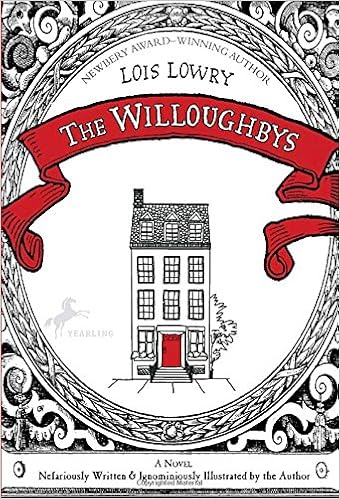
Image result for the willoughbys   The girls and I just finished reading Lois Lowry's The Willoughbys. In truth, we almost stopped the second night of reading. I was so turned off by the children's awful behavior. Somehow I hadn't gotten the memo that the book was a parody of traditional British children's books. After realizing that--rather, going on Goodreads to see "what the heck" the book was all about!--we raced through it pretty quickly. The girls found certain parts hilarious like the naming of the abandoned baby, and also the candy bar (Baby Ruth). And I think the quote, "It makes me want to womit," will forever be a part of our family's inside joke quote vernacular. I really enjoyed this NPR podcast with Lois Lowry. It was so fun!

   Here is the Goodreads description:
Abandoned by their ill-humored parents to the care of an odious nanny, Tim, the twins, Barnaby A and Barnaby B, and their sister, Jane, attempt to fulfill their roles as good old fashioned children. Following the models set in lauded tales from A Christmas Carol to Mary Poppins, the four Willoughbys hope to attain their proscribed happy ending too, or at least a satisfyingly maudlin one. However, it is an unquestionably ruthless act that sets in motion the transformations that lead to their salvation and to happy endings for not only the four children, but their nanny, an abandoned baby, a candy magnate, and his long-lost son too. Replete with a tongue-in-cheek glossary and bibliography, this hilarious and decidedly old-fashioned parody pays playful homage to classic works of children’s literature.

Farm Girl Reading


Unknown artist (Russian, 20th century) - "By the window", 1959 - Springville Museum of Art:

Oh Summer! You Cannot Come Soon Enough!


Monika Luniak: